Leviro Desk
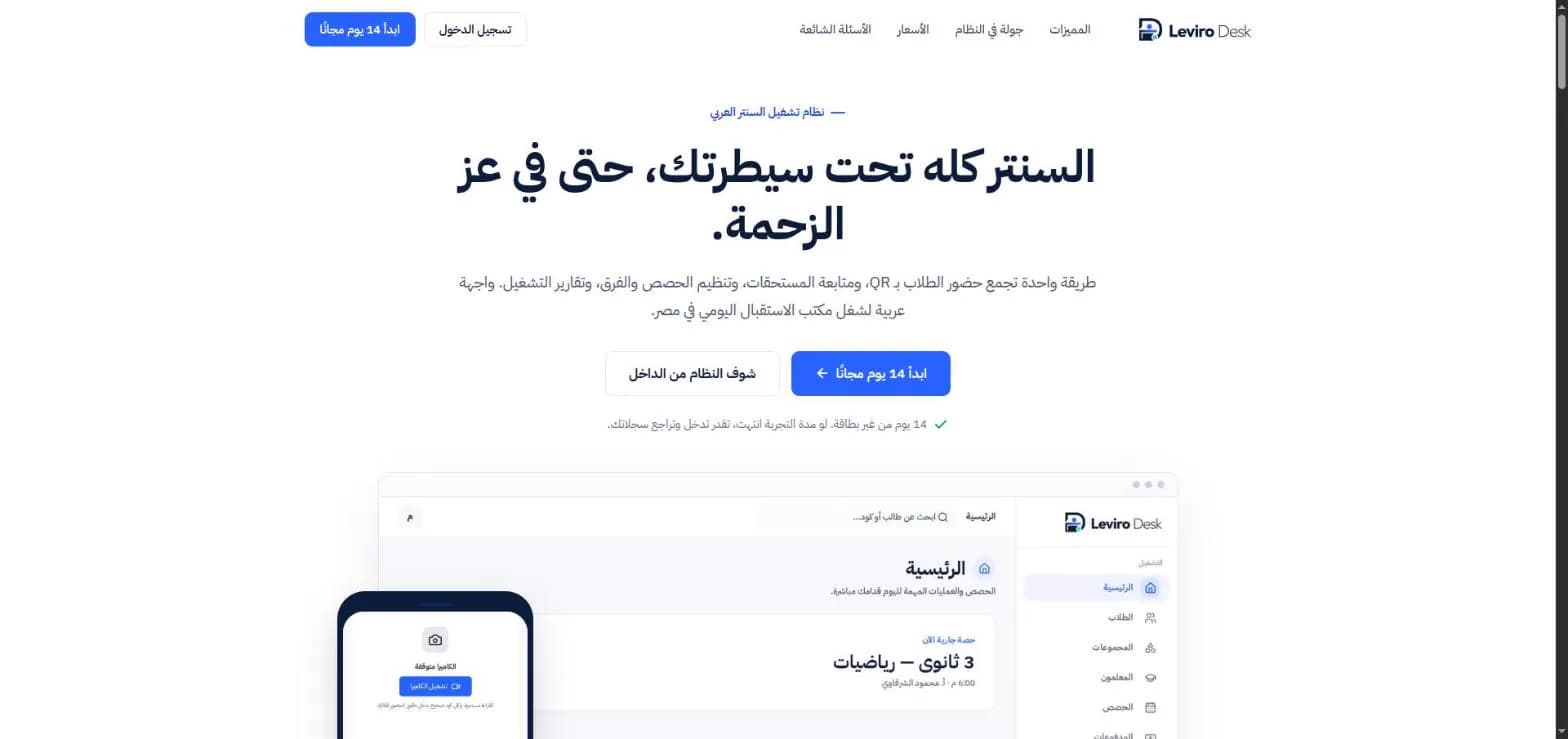
Arabic-first tutoring center software for attendance, student records, payments, and WhatsApp follow-ups.
Project Overview
Leviro Desk is Leviro's own SaaS product for tutoring centers and private teachers. Staff use an Arabic operator app to manage students, sessions, attendance, and payments. A separate platform console manages workspaces and subscriptions. The Desk landing site presents the product, pricing, FAQ, and legal pages.
The problem
Center records often sit across paper lists, spreadsheets, and messaging apps. This makes it hard to connect a student's attendance with a specific session, keep payment history consistent, or see which messages still need delivery. Leviro Desk puts those operations behind one workspace account. The marketing site explains the same product in Arabic, with right-to-left layouts and product examples.
Key features
- Register students, groups, teachers, and class sessions from the operator app.
- Check students in with session-bound QR codes; an offline browser outbox replays scans after reconnection.
- Record payments and generate monthly dues as stored snapshots in integer piastres.
- Import student data from CSV or XLSX through a browser wizard.
- View attendance and collection reports, with CSV export.
- Pair WhatsApp and queue attendance or payment follow-up messages for a separate worker.
- Manage workspace access and subscriptions from a platform admin console.
- Browse Arabic product, pricing, FAQ, and policy pages on the separate marketing site.
Technical architecture
Next.js serves the operator and admin apps. A NestJS API applies authentication, workspace permissions, and business rules. Shared Zod contracts define data crossing the apps. TypeORM stores records in PostgreSQL; Redis supports sessions, rate limits, and BullMQ jobs. The WhatsApp worker keeps the Baileys connection and delivers queued messages from an outbox. The separate Next.js landing repository serves static marketing content with client-side interactions.
Engineering highlights
- Workspace identity comes from the authenticated session, so a client cannot select another center by sending a workspace ID.
- Attendance replay uses idempotency keys to avoid duplicate check-ins after a device reconnects.
- Payment amounts use integer piastres; monthly dues are persisted rather than recalculated from later price changes.
- Arabic layout, QR scanning, and offline attendance are implemented in the operator app.
Image Gallery
Client Reviews
Feedback from people who used or collaborated on this project.
Share your experience with this project
Related projects
Leviro Toolbay
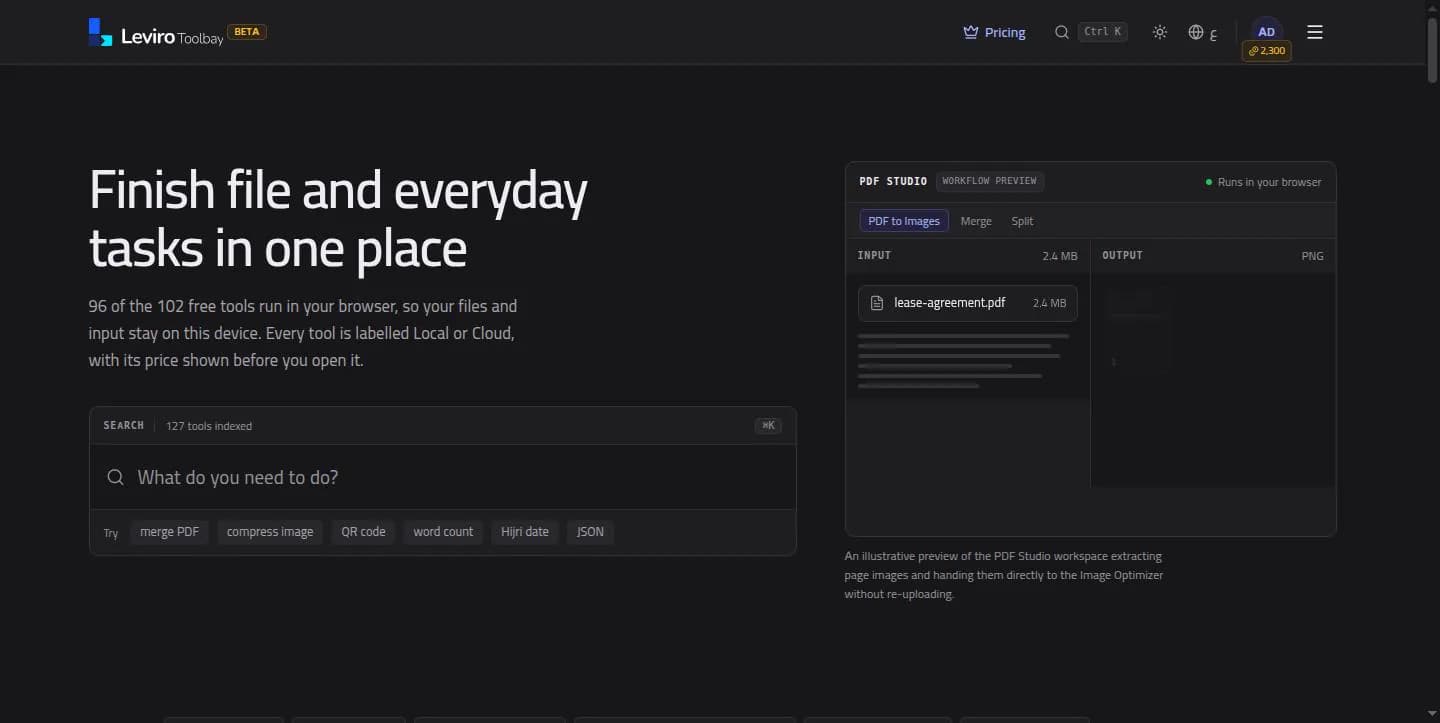
Bilingual beta toolkit with free browser tools and credit-priced document, image, and writing workflows.
Leviro Jobs Hunter
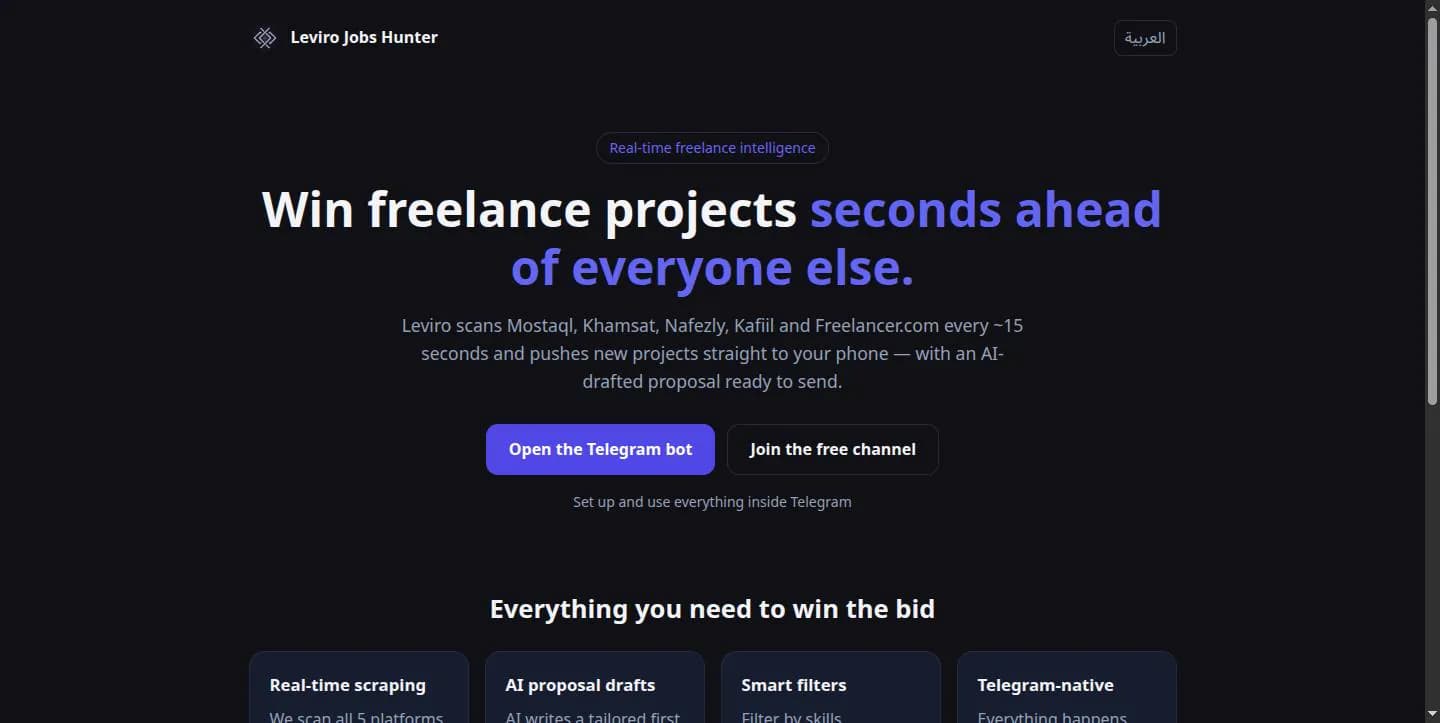
Leviro service that finds freelance opportunities, matches them to skills, and sends results through Telegram.
Eshra7ly College Platform
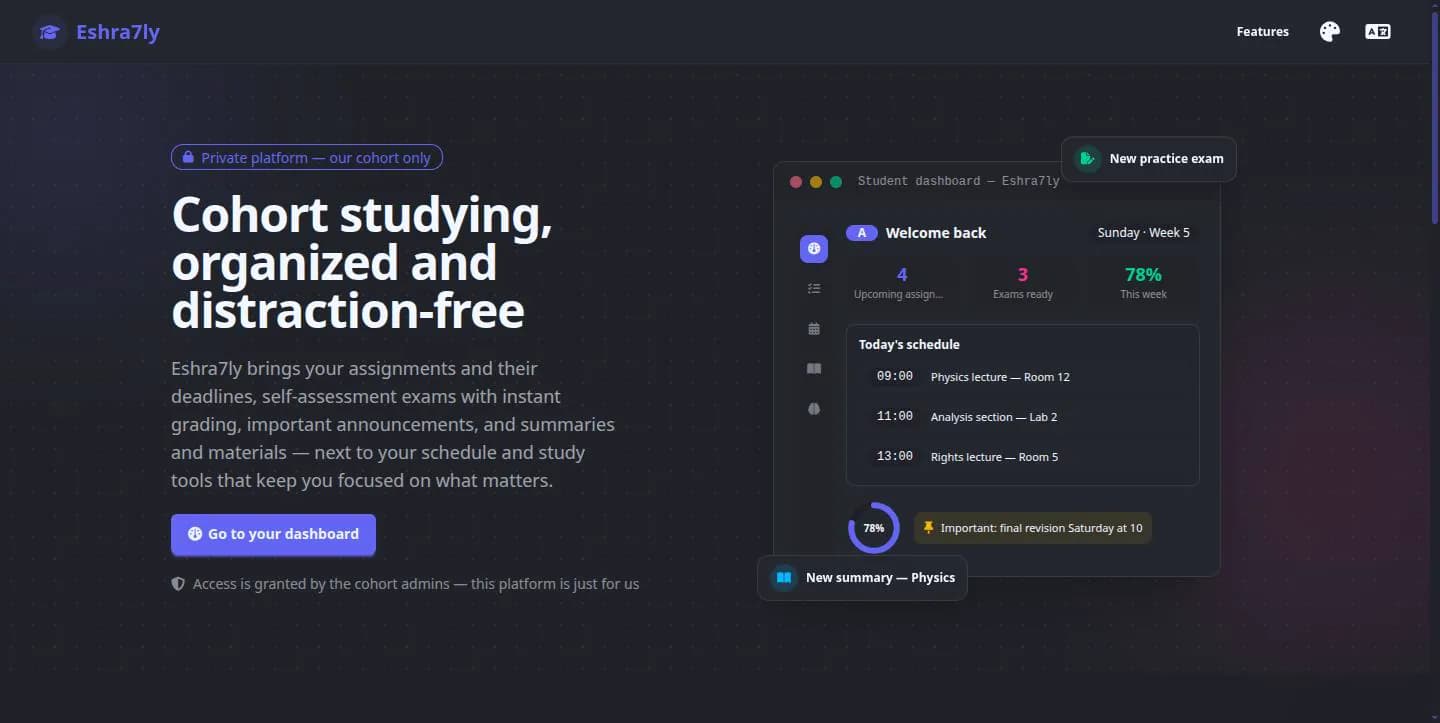
Private bilingual college platform for assignments, exams, schedules, and student discussion.