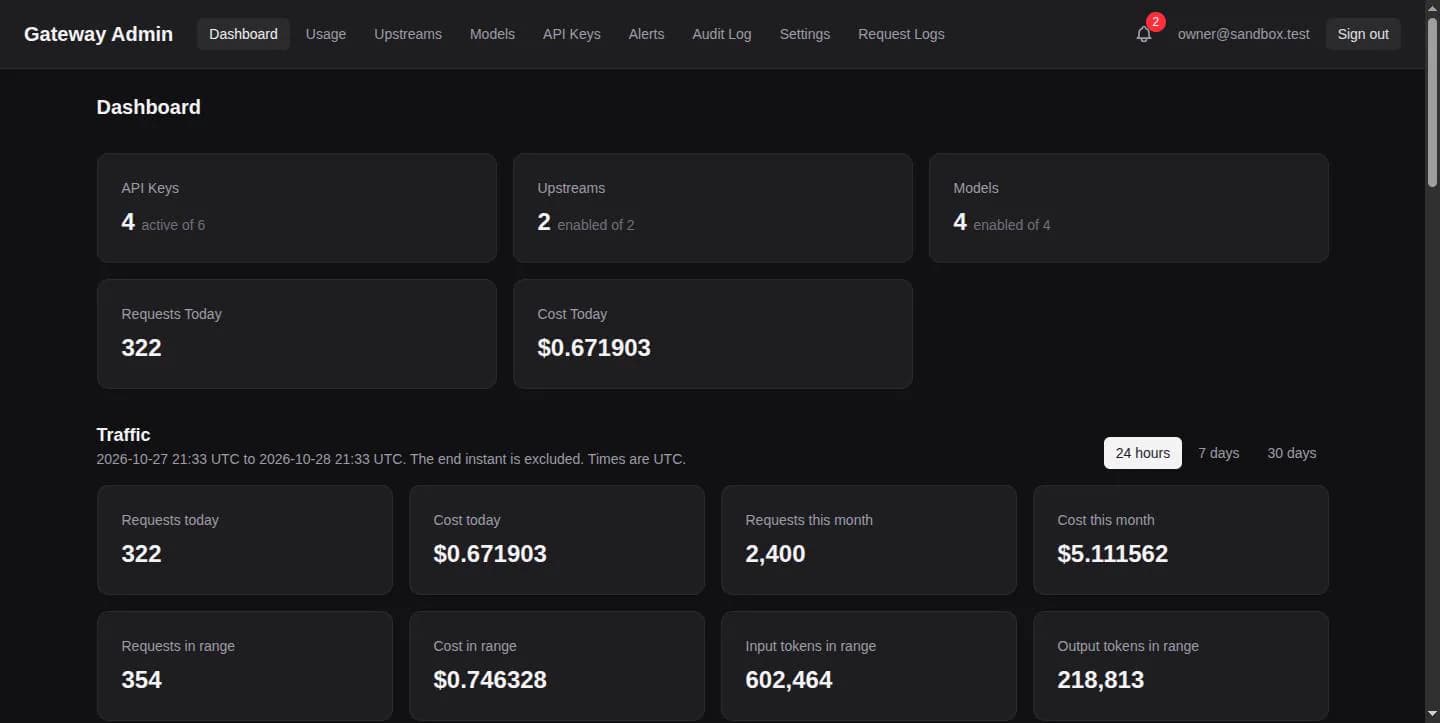
Vertex AI Proxy
Open-source Gemini-compatible API gateway for Vertex AI with prepaid keys, usage tracking, limits, and an admin console.
Project Overview
Vertex AI Proxy is an open-source gateway for developers who want a Gemini-compatible API backed by Google Vertex AI. An operator manages models, upstream credentials, keys, prices, and usage in a separate web console. Clients call the gateway with a key rather than handling the upstream credential themselves.
The problem
Sharing a cloud credential with every client makes access and spending difficult to control. A gateway needs to accept familiar model endpoints, restrict each key, reserve credit before a request, and record what the upstream actually used. Streaming responses add another accounting path because a client may disconnect before the stream finishes.
Key features
- Public model endpoints handle generation, streaming generation, token counting, embeddings, and model discovery.
- Administrators create, suspend, revoke, regenerate, and bulk-create gateway API keys.
- Keys can restrict models, endpoints, and IP addresses, with request and token limits.
- Prepaid balances use pricing rules and a credit ledger for usage accounting.
- The console exposes usage reports, CSV export, request metadata, and an audit log.
- Multiple Vertex AI upstreams can be configured and selected by the routing layer.
- Health endpoints and a protected metrics endpoint support operation.
Technical architecture
A NestJS API receives the Gemini-style request and authenticates its gateway key. Redis holds rate-limit counters and short-lived credit reservations. The API selects an upstream, calls Vertex AI, then settles usage into a PostgreSQL ledger. TypeORM maps the stored keys, pricing rules, accounts, and ledger records. A Next.js admin app calls separate administration endpoints. Docker Compose definitions include PostgreSQL, Redis, the API, the console, and nginx for self-hosting.
Engineering highlights
- Redis Lua scripts make credit holds and rate-limit decisions atomic across concurrent requests.
- Upstream credentials are encrypted with AES-256-GCM; administrator passwords use Argon2id.
- The gateway settles streamed requests on completion, failure, or cancellation, so each path reaches accounting.
- API keys are stored as hashes; the full value is returned when a key is created or regenerated.
Image Gallery
Client Reviews
Feedback from people who used or collaborated on this project.
Share your experience with this project
Related projects
WhatsApp Channel and Chat API
Self-hosted API for WhatsApp channels and private chats, with media checks, send queues, and SQLite deduplication.
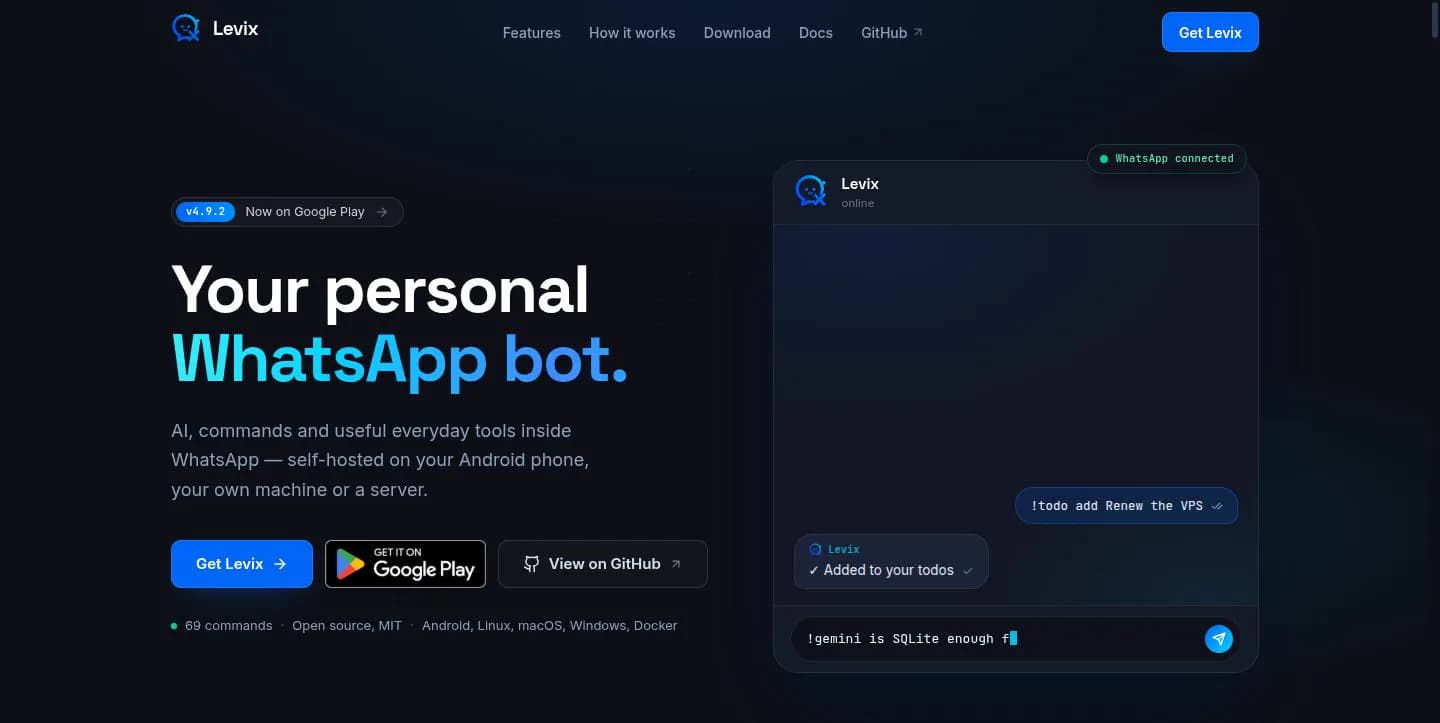
Levix Self-Hosted WhatsApp Bot
MIT-licensed WhatsApp bot with AI tools, moderation, scheduling, Android hosting, and a companion website.
ZCode Desktop Bridge
Unofficial experimental CLI that submits a brief through an authenticated ZCode Desktop session using local CDP and RPC.